Contact Us:

670 Lafayette Ave, Brooklyn,
NY 11216

+1 800 966 4564
+1 800 9667 4558

Crown and Conch detail on the Eastern facade (Sourced by Author)

Restoring the Forgotten Royal Guesthouse

On the first platform of Thrissur Railway Station stands a small yet architecturally remarkable structure, now largely overlooked and repurposed as a storage space by the Railways. This historic building, believed to have once served as a royal guesthouse, is thought to have been used by the king to monitor the progress of railway construction in the region. Despite its modest size, the structure exhibits distinctive colonial architectural features, making it a significant yet forgotten piece of Kerala’s built heritage.

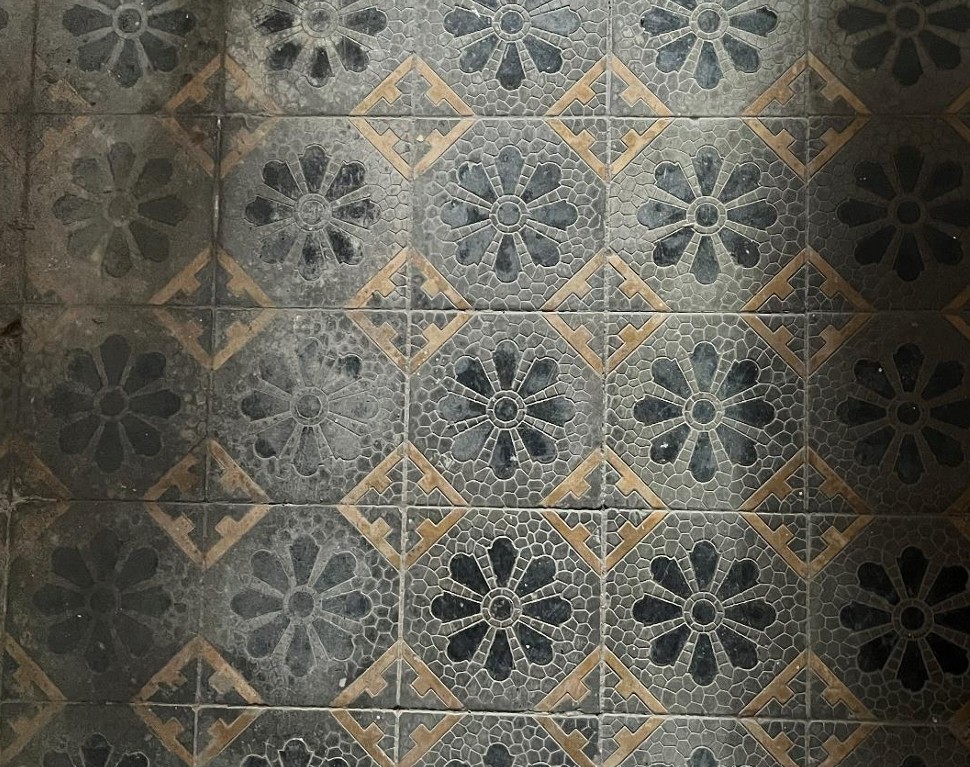
The building boasts arched openings, high ceilings, expansive interior volumes, polygonal ancillary rooms, and patterned floor tiles—typical of colonial design sensibilities. Stained glass windows still adorn its openings, allowing dappled light to enter and hinting at the building’s erstwhile grandeur. One of its most unique and historically important elements is the relief work on the eastern façade. Carved within the largest of the three arches, this feature showcases the Royal British Crown alongside the Conch symbol of the Cochin Kingdom, symbolically cast together—an emblem of colonial collaboration and regional governance.

Though now neglected and unnoticed by most commuters, this building stands as a silent testimony to Thrissur’s layered history and deserves renewed attention, preservation, and reinterpretation as part of Kerala’s colonial heritage.

Crown and Conch detail on the Eastern facade (Sourced by Author)

Incompatible modern interventions like the application of blue paint over the wooden works and the use of flex materials displaying painted images of gods have further eroded the temple’s cultural and aesthetic value.

Incompatible modern interventions have significantly diminished the cultural and aesthetic integrity of Ayyanthole Temple. The application of blue paint over traditional wooden elements and the use of flex boards displaying digitally printed images of deities disrupt the temple’s original visual harmony and architectural authenticity. These alterations not only clash with the temple’s traditional Kerala style but also undermine the craftsmanship and symbolic intent embedded in its design. Such changes reflect a growing disregard for heritage-sensitive practices, highlighting

the urgent need for awareness and conservation efforts that respect the temple’s historical, artistic, and spiritual significance.
This project seeks to document and raise awareness about these changes, urging for a more sensitive and informed approach to temple maintenance and restoration. Preserving the authentic character of Ayyanthole Temple is essential not just for heritage conservation, but also for maintaining the spiritual and cultural continuity of the community it serves.

Floor tiles having different patterns can be seen in different rooms, which is an evidence of its architectural heritage and the skilled craftsmanship that went into the detailing of this building’s interiors.

Ayyanthole Temple, once adorned with intricate wooden roof works that reflected the mastery of traditional Kerala craftsmanship, is now witnessing a gradual loss of its architectural authenticity. The temple’s heritage, deeply rooted in the use of natural materials and skilled artisanal detailing, is slowly fading as modern interventions take precedence. The replacement of finely carved timber with prefabricated steel and iron structures not only alters the visual language of the temple but also undermines the centuries-old techniques that gave it cultural significance.

The arched openings being a colonial feature open inwards to a lower level. This indicates that the current platform was raised or constructed later and also the building’s antiquity. The opening in the middle also has a louvered door, another notable feature.